
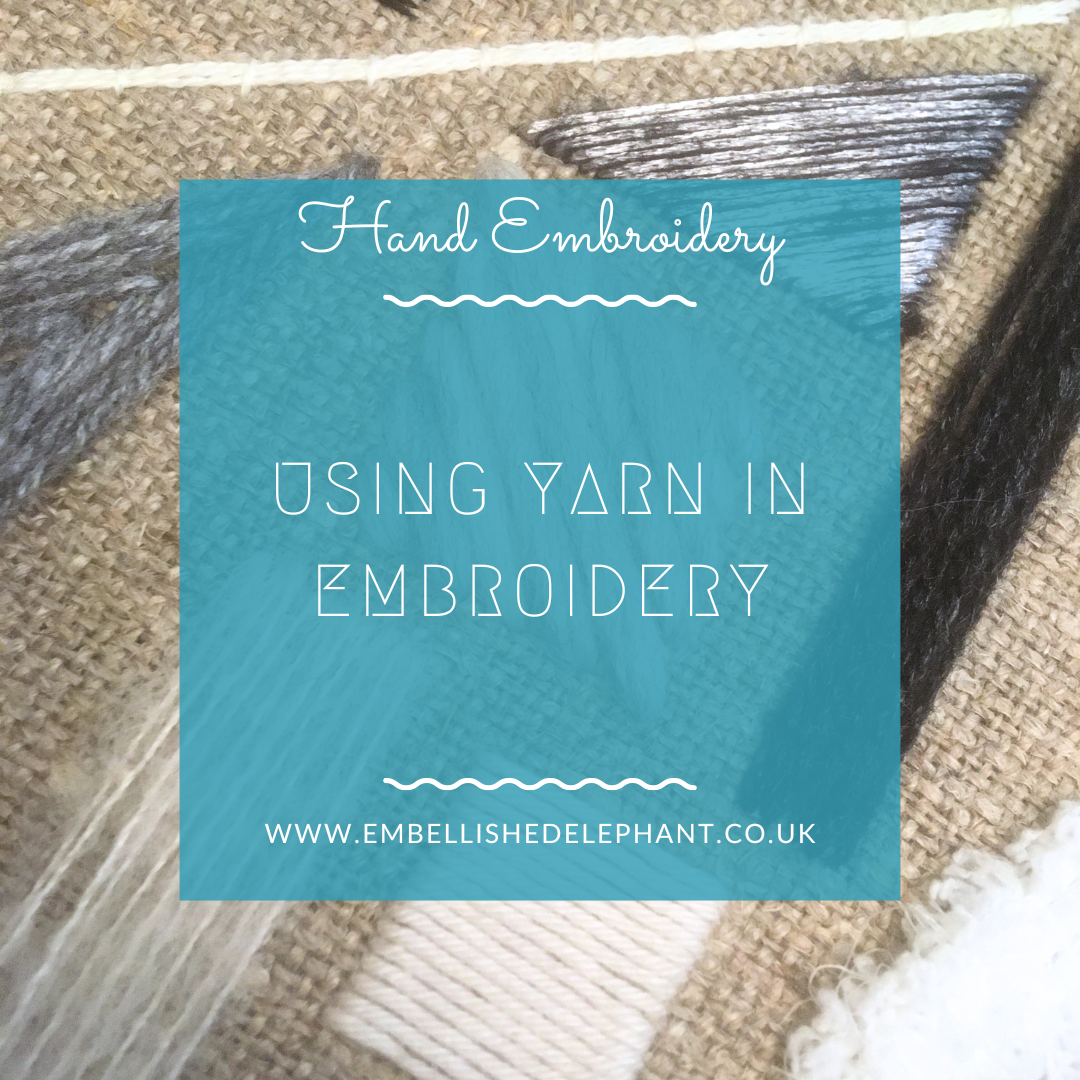
Traditionally, embroidery is done with embroidery floss or thread, but yarn can also be used especially if you want to create a different texture make a larger project.
Thickness
The main differences when using yarn for embroidery is the thickness. Most yarn is thicker than traditional embroidery thread meaning it is great for working larger areas of stitching. Combining different thicknesses of yarn can work really well.
texture
Yarn is made from a variety of materials and this can lead to a range of textures. Fluffy yarn such as alpaca can be contrasted with smoother yarn such as cotton.
Needles
With yarn being thicker, you won’t be able to use your normal embroidery needles. A thicker needle with a larger eye will be needed, I tend to use a chenille needle or a tapestry needle depending if it is closed weave fabric (that will need piercing with a sharp point) or more open weave fabric (where the needle can easily pass through the holes).
fabric
With yarn being thicker, this also means it is heavier so a sturdier fabric is required. The weave of the fabric also needs to be considered with larger gaps between the warp and weft threads so that the yarn can fit through (if the gaps are too small you need to tug the yarn through the fabric which hurts your fingers and can cause damage to the yarn or fabric). Aida and hessian are good open weave fabrics. Felt and denim are sturdier fabrics that can hold the weight of the yarn stitches but do require a large pointed needle to pass through.
stitches
Some of the more intricate stitches are more challenging to use when stitching with yarn. I’ve found that using the basic stitches works best, allowing the yarn colour and texture to shine.
Enjoyed this blog post? I share embroidery tips and a free embroidery pattern in my monthly newsletter. Sign up here to receive the newsletter on the 1st of each the month.